


Starbrew Cafe: Mystical Merge
Extra Dimension Games Inc.
Starbrew Cafe: Mystical Merge is the kind of puzzle game I open when I want something gentler than a competitive match but more purposeful than a few disconnected mini-games. Its central idea is wrapped in a magical café setting, where restoring a charming world gives each merge a sense of direction. I found the appeal less in speed and more in the steady rhythm of combining objects, clearing space, and deciding what deserves attention next.
That relaxed presentation does not mean the game is completely frictionless. The most important question is whether you enjoy planning around limited room and gradual progress. If you like organizing a board, watching small combinations become useful resources, and returning for another short session, this puzzle game has a lot to offer. If you want instant solutions, constant action, or a purely competitive challenge, its slower structure may feel restrictive.
How the magical café puzzle loop works in practice
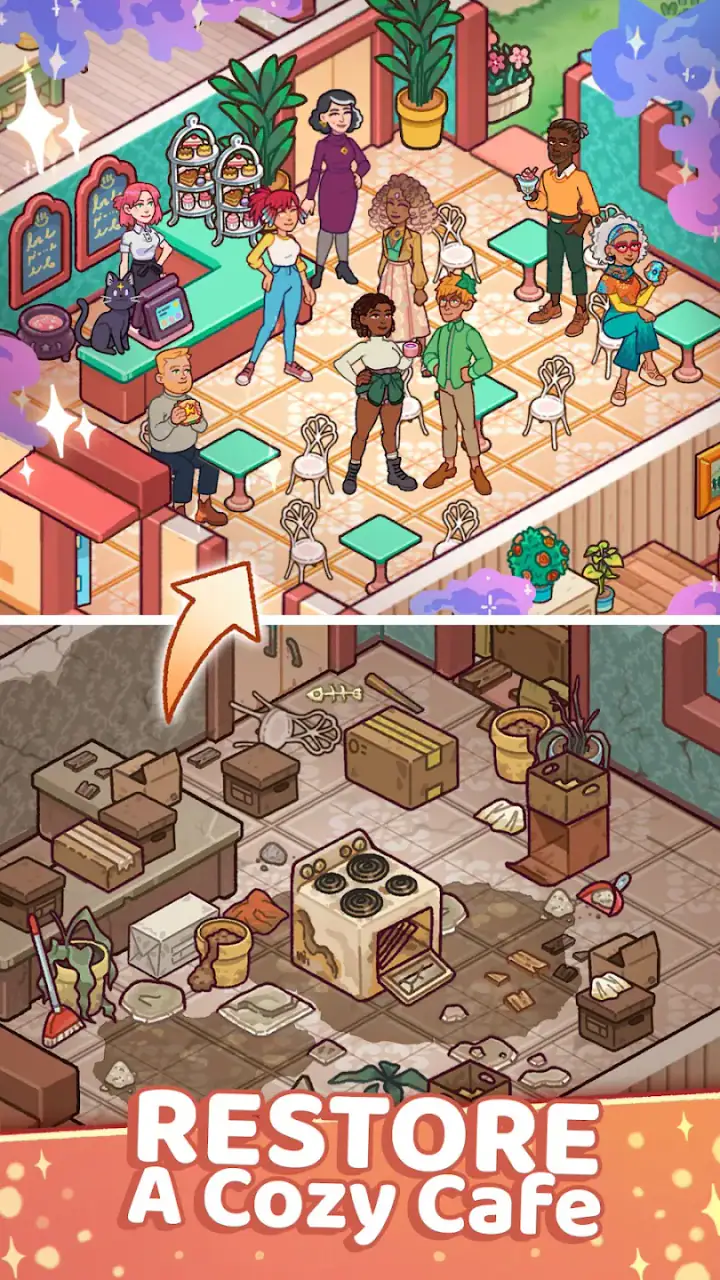
At its heart, this is a merge puzzle game built around restoring a cute magical setting. Rather than treating every level as an isolated board, the game gives your actions a broader purpose: progress helps bring the café world back to life. That framing matters because it makes ordinary puzzle decisions feel connected to a larger journey.
My favorite part of the loop is the way the board encourages short-term and long-term thinking at the same time. A quick combination can free a valuable space immediately, but holding an item for a later chain may be the smarter choice. That tension gives the game more depth than simply joining identical pieces whenever possible.
The café theme also makes the experience easier to settle into. The visual tone is cute and magical rather than aggressive, so I can imagine playing it during a quiet break, while waiting for an appointment, or at the end of the day. It is a good fit for people who want a puzzle that feels like an ongoing place instead of a succession of anonymous challenges.
Related News






Extra Dimension Games Inc. is the developer behind the game. It is free to download, and the store summary presents the main fantasy clearly: rebuilding a charming world filled with magic. The game is listed for Teen audiences, so parents should still check whether its tone and spending options suit the person using the device.
Why board management becomes the real challenge
The obvious move is usually to merge as soon as possible. In my experience, that is not always the best move. A board can become crowded with pieces that are individually useful but awkwardly placed, and a careless combination may remove the flexibility needed for a more valuable chain. I learned to treat empty spaces as resources rather than as leftovers.
One useful habit is to pause before completing a merge and scan the entire board. Look for pairs that are already close together, items that could be moved into a future chain, and objects blocking the area where new pieces are likely to matter. This small pause prevents the common mistake of solving the immediate problem while creating a larger storage problem.
Gallery
Another practical approach is to separate “working” pieces from pieces you are saving. I keep the items needed for my current objective in one area and avoid scattering them around the board. This is especially helpful during a short session, because I can return later without spending the first minute trying to remember what I was building toward.
That organization is one of the game’s less obvious skills. The puzzle is not only about recognizing matching objects; it also rewards spatial discipline. Players who enjoy tidy layouts and incremental planning will probably appreciate this more than players who prefer tapping through obvious combinations.
Progress feels meaningful, but it asks for patience
Restoring the world gives progress a visible purpose, yet the pace is deliberately more gradual than in a fast arcade puzzle. I never felt that every session needed to produce a dramatic breakthrough. Small improvements, a cleaner board, or one useful chain can be enough to make a return visit worthwhile.
The trade-off is that the game may test your patience when you are focused on a particular goal and do not have the right pieces available at the right moment. That kind of delay is not automatically unfair, but it can feel more noticeable when your board is full or when you have already invested time in arranging it carefully.
For everyday use, I would play it in planned bursts rather than expecting an uninterrupted marathon. A few minutes can be enough to make decisions, tidy the board, and leave with a clear next step. If you are the sort of player who wants to finish a complete puzzle in one sitting, the ongoing restoration format may feel less satisfying than a traditional level-based game.
The game was released on October 18, 2023, and its current version is 1.80.0. It supports devices running Android 7.1 or later. Those details make it accessible to many older Android phones, although the actual comfort of play will still depend on screen size, performance, and how easily you can move pieces around a busy board.
Where spending enters the experience
Starbrew Cafe: Mystical Merge is free to play, with optional in-app purchases ranging from $0.99 to $149.99 per item. That range is important context for anyone deciding whether to let a child use the game or whether to keep spending tightly controlled on a personal device.
I would approach the purchase system with a simple rule: treat spending as a convenience choice, not as part of the basic promise of the game. Before buying anything, I would play long enough to decide whether the core merge loop itself is enjoyable. If the board management already feels like work, paying to move through it faster is unlikely to fix the underlying problem.
The most useful way to think about optional purchases is in terms of pressure. A player who is comfortable waiting and reorganizing can approach the game as a free puzzle experience. A player who dislikes delays, crowded storage, or slow objectives may feel more tempted to spend. That difference is personal, but it is worth recognizing before a small purchase becomes a habit.
I also recommend setting device-level purchase protections, especially for Teen-rated games used by younger players. The presence of low-cost items can make an individual decision feel harmless, while the higher end of the listed range deserves a deliberate choice. A clear spending limit keeps the game in its proper place: entertainment, not an open-ended expense.
Is the progression fair to non-spenders?
From a fairness perspective, the strongest case for the game is that its main appeal comes from making thoughtful merges and managing the board. Those are decisions the player can improve through practice. Better organization can reduce wasted space, prevent accidental dead ends, and make each session more productive without requiring a purchase.
That does not make the experience equally comfortable for everyone. A patient player and an impatient player may experience the same progression very differently. The patient player can accept a slower rhythm and use each return visit to prepare the board. The impatient player may see the same rhythm as pressure to pay for convenience.
I would not recommend judging the game by how quickly it can be pushed forward. Its better qualities appear when you accept the restoration pace and focus on making clean decisions. If you want a puzzle where every advantage comes from skill and where paid options are absent, a premium puzzle or a straightforward offline title would be a better match.
Compared with classic match-three games, this one feels less centered on clearing a fixed arrangement and more focused on building a useful collection over time. Compared with pure decoration games, it gives the puzzle board a more active role. And compared with competitive puzzle games, it removes the pressure of facing another player directly. The compromise is that the game’s challenge comes from patience, planning, and progression management rather than a final score or head-to-head result.
Three habits that make the board easier to control
First, I avoid filling every available space just because a new piece can be placed there. A crowded board reduces future options, so I prefer a layout with visible groups and a clear working area. This is particularly valuable when I am about to start a larger chain and need room to move related pieces together.
Second, I use short sessions to prepare rather than forcing a result. If the next objective is not immediately achievable, I can still combine obvious pairs, remove clutter, and position pieces for the next visit. That turns a potentially disappointing session into useful setup time.
Third, I resist merging automatically when two pieces are available. Sometimes the better decision is to keep them separate until I understand what the surrounding board needs. This is a small but meaningful shift: the goal is not merely to create a higher-tier object, but to preserve enough flexibility to continue playing efficiently.
These habits will not make every slowdown disappear, and they do not replace whatever optional conveniences the game offers. They do, however, make the free experience feel more deliberate. They also reveal whether you genuinely enjoy this style of puzzle, because the game rewards players who like planning several moves ahead.
Who will enjoy it, and who should skip it?
I would recommend it to players who like cozy magical settings, gradual restoration, and puzzles that can be played in small portions. It suits someone who enjoys arranging objects, making careful choices, and seeing a persistent world develop over time. It is also a reasonable choice for a casual player who wants something calmer than a timed or competitive puzzle.
It is less suitable for anyone who becomes frustrated by limited space, delayed goals, or the possibility of feeling nudged toward optional purchases. Players looking for a fully self-contained premium experience should choose a paid puzzle instead. Likewise, people who need fast stimulation may prefer a traditional match-three game with clear levels and immediate endings.
The Teen content rating is another reason to make a thoughtful choice for younger players. Even when the fantasy presentation feels friendly, the combination of ongoing progression and purchasable items is something families may want to discuss in advance. I would install it for a teenager only after checking the device’s purchase controls and agreeing on boundaries.
What I would check before committing to it
I would begin by playing without spending and pay attention to my reaction when progress slows. If I start thinking about the next merge and enjoy reorganizing the board, that is a good sign. If I repeatedly feel that I am waiting for the game to become enjoyable, I would stop there rather than assuming a purchase would improve it.
I would also check how comfortably the game runs on my particular phone, especially if it is an older Android device. The minimum operating system is Android 7.1, but compatibility on paper is not the same as a pleasant experience. A smaller display can make board organization more awkward, and a less responsive device can turn careful placement into needless frustration.
Finally, I would decide what role I want the game to play. As a quiet daily puzzle, it makes sense. As a competitive skill test, it is not the strongest choice. As a free game for someone who can manage optional spending responsibly, it is appealing. As an unmonitored game for a child, I would be more cautious because of the Teen rating and the broad purchase range.
My trust verdict after weighing the trade-offs
The game has a clear identity, and I think that helps it stand out among casual puzzle releases. The magical café setting gives the merge board a reason to exist, while the restoration structure makes small actions feel connected. I also appreciate that the best free-play strategy is not simply tapping faster; it is learning to protect space, preserve options, and plan around the board you have.
My reservations are equally clear. The gradual pace will not satisfy everyone, and players who dislike any form of purchase pressure may be more comfortable with a premium alternative. The listed purchase range means I would not treat spending casually, particularly on a shared device. I would play first, set controls, and decide whether the game remains enjoyable when approached without buying anything.
With a 4.7 average from around 18 thousand ratings and more than 100 thousand installs, it has attracted a substantial audience. Those figures suggest broad interest, but they do not replace personal testing: merge games are unusually dependent on how much you enjoy repetition, organization, and waiting for a longer chain to develop.
My final recommendation is positive but specific. Try it if you want a cozy, ongoing puzzle about rebuilding a magical café and you are happy to progress at a measured pace. Keep your board organized, use short sessions intelligently, and treat purchases as optional conveniences rather than requirements. Its best value comes from thoughtful play, not from rushing the restoration. For me, that makes it a pleasant choice for relaxed puzzle time, provided I keep the spending boundaries as carefully arranged as the game board.
FAQs for Starbrew Cafe: Mystical Merge
What is Starbrew Cafe: Mystical Merge about?
Starbrew Cafe: Mystical Merge is a casual merge game that combines café management, magical storytelling, and puzzle progression. You merge matching ingredients and useful objects to create improved items, then use them to prepare recipes, serve customers, and restore or expand the café. Along the way, the game introduces characters, quests, and a fantasy-themed world that gives the usual merge mechanics a more narrative-driven structure.
How does the merging gameplay work in Starbrew Cafe: Mystical Merge?
The main gameplay loop involves combining three or more identical items on the board to produce a higher-level object. These items can include ingredients, kitchen supplies, tools, and other resources needed for café tasks. Completing merges helps fulfill orders and story objectives, while careful board management is important because available spaces can become limited. Planning combinations instead of merging randomly makes progress smoother.
Can Starbrew Cafe: Mystical Merge be played offline?
Some basic gameplay may remain available without a constant internet connection, but the full experience can depend on online services. Features such as advertisements, purchases, cloud synchronization, events, updates, and certain social or account-related functions may require connectivity. If you intend to play while traveling or without reliable internet, it is best to test the game in offline mode first and avoid assuming that every feature will work.
Is Starbrew Cafe: Mystical Merge free to download and play?
Starbrew Cafe: Mystical Merge is generally offered as a free download, but it may include optional in-app purchases and advertisements. Purchases can provide premium currency, boosters, energy, or other items that reduce waiting and help with faster progression. You can play without spending money, although energy limits, timers, and limited resources may make progress slower. Check the store listing and device settings before downloading.
Is Starbrew Cafe: Mystical Merge suitable for children?
The game is designed around colorful visuals, light fantasy themes, simple merging puzzles, and café management, making it approachable for many younger players. However, parents should review the age rating because recommendations can differ between Android and iOS. Since the game may contain advertisements, optional purchases, timers, and online features, parental controls and purchase restrictions are advisable if children will be playing independently.
Pros
- Relaxing merge gameplay with a charming magical café setting.
- Story-driven progression gives purpose to completing merge tasks.
- Bright
- polished artwork makes characters and café upgrades enjoyable.
- Playable in short sessions
- making it suitable for casual gaming.
- New recipes
- decorations
- and areas provide a steady sense of progress.
Cons
- Energy limits can interrupt play during longer gaming sessions.
- Some upgrades and quests require significant resource grinding.
- Random item drops may make specific merge objectives frustrating.
- Optional purchases can speed up progress and reduce waiting times.
- The interface may feel crowded as the café and item collection expand.


